

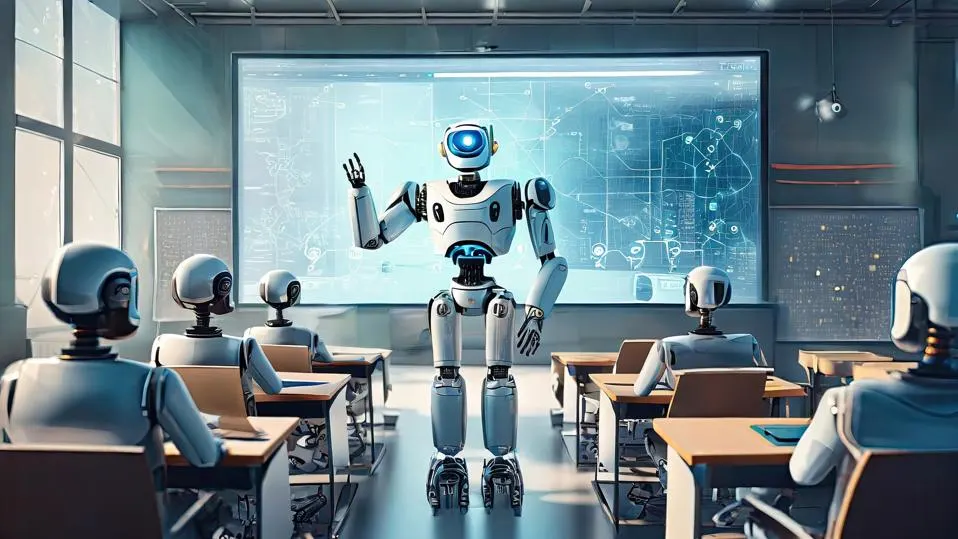
Artificial intelligence tools are transforming modern education, offering teachers speed and convenience in lesson design. Many educators have turned to AI chatbots to save time creating classroom materials. However, while automation delivers efficiency, it may fail to inspire authentic student engagement or deeper learning.
Recent studies highlight limitations in AI-generated civics lesson plans. These lessons often lack inclusivity and higher-order thinking opportunities vital for building democratic understanding. Instead of promoting exploration or discussion, such plans frequently rely on rote learning methods that limit creativity and critical analysis.
Educators must evaluate how generative AI fits into instructional design. Without critical review, teachers risk adopting materials that simplify complex ideas and exclude diverse perspectives. The issue raises a broader question about whether automated education tools can ever replace teacher-led creativity and human insight.
AI in Lesson Planning: The Growing Trend
Rapid Adoption Across Classrooms
A rising number of K–12 teachers now integrate AI for classroom preparation. Many educators report using tools for creating outlines, learning objectives, and activities. The appeal lies in speed—AI can produce detailed plans within seconds, reducing hours of preparation time.
Why Educators Turn to Automation
Teaching demands continuous planning, assessment, and adaptation. Generative AI offers templates and structured sequences, which can simplify lesson design. Teachers often see these tools as assistants, generating base content quickly for later customization.
- Key Advantage: Efficiency in drafting lesson outlines
- Common Use: Generating objectives, worksheets, or quizzes
- Benefit: Reducing workload pressure on educators
- Limitation: Lack of contextual understanding
Tools Leading the Movement
Platforms like ChatGPT, Gemini, and Copilot dominate the AI-assisted planning space. These chatbots were built for general text generation, not specialized education design. Their large-scale data sources rarely reflect curriculum standards, classroom diversity, or localized learning goals.
Evaluating AI-Generated Lesson Plans
Scope of Research
Educators analyzed over three hundred AI-produced civics lesson plans aligned with Massachusetts standards. Each plan included objectives, activities, assessments, and homework tasks. Researchers compared standard and interactive formats to measure instructional quality and engagement potential.
Educational Frameworks Used
Two academic frameworks guided the evaluation: Bloom’s Taxonomy and Banks’ Levels of Multicultural Integration. Bloom’s model distinguishes cognitive skill levels, from basic recall to creative synthesis. Banks’ framework measures inclusion of multicultural content across lessons.
Results from Bloom’s Taxonomy
Analysis revealed ninety percent of AI-generated activities targeted lower-order thinking skills—remembering, understanding, and applying. These lessons encouraged repetition rather than analysis or creation. Students focused on definitions and summaries instead of developing critical reasoning or civic awareness.
Multicultural Integration Findings
Using Banks’ model, researchers found that only a small percentage—about six percent—of civics plans incorporated multicultural perspectives. Lessons often centered on mainstream narratives, overlooking women, Black Americans, Latinos, Asian and Pacific Islanders, disabled individuals, and other historically underrepresented communities.
- Observation: Limited inclusion of diverse cultural voices
- Common Focus: Heroes and holidays, not systemic understanding
- Impact: Reduced awareness of social diversity
- Recommendation: Expand perspectives within AI-generated content
Limitations of AI-Driven Teaching Materials
Lack of Contextual Sensitivity
AI chatbots lack real-world awareness. They process patterns but do not interpret classroom dynamics or student needs. Consequently, outputs feel generic and disconnected from authentic learning environments.
One-Size-Fits-All Content
Generative tools often produce uniform lesson structures that overlook individual differences. Education thrives on flexibility and adaptation, yet AI delivers repetitive frameworks. True teaching requires personal connection, spontaneity, and reflection—qualities absent in automated systems.
Misalignment with Pedagogical Goals
AI tools were not designed with learning psychology or pedagogy in mind. While they simulate structured thinking, they fail to replicate the empathy and judgment required in effective teaching. Teachers risk prioritizing mechanical accuracy over student-centered engagement.
- Challenge: Absence of emotional intelligence in AI
Risk: Homogenized content lacking creativity
Solution: Combine AI output with teacher insight - Outcome: Balanced integration of automation and expertise
How Educators Can Improve AI Integration

Strategic Prompting for Better Output
Teachers can guide AI tools through detailed prompts. Instead of general commands, context-rich instructions improve content relevance. A clear prompt describing student grade level, learning goals, and desired outcomes yields more effective material.
Example of Effective Prompting
Instead of requesting “Create a lesson plan on the Constitution,” a teacher could specify:
“Design an 8th-grade civics lesson meeting Massachusetts standards, including three activities at Bloom’s evaluation or creation levels and integrating underrepresented historical perspectives.”
This method signals the AI to design materials aligned with academic depth and diversity goals.
Using AI for Inspiration, Not Automation
Educators benefit most when AI serves as a collaborator. Teachers can extract innovative ideas, modify them, and embed them within authentic classroom experiences. AI should complement human creativity, not replace it.
Encouraging Reflective Practice
By analyzing AI outputs critically, educators refine their understanding of lesson structure and inclusivity. Reflection promotes professional growth while keeping human expertise central to the teaching process.
Rethinking the Role of AI in Education
Supporting, Not Replacing Educators
AI provides a starting point for lesson creation but lacks moral reasoning, empathy, and cultural awareness. These human traits shape meaningful education. Teachers must remain primary decision-makers, using technology as a supportive instrument.
Promoting Inclusivity and Critical Thinking
Effective civic education should foster dialogue, analysis, and collaboration. Teachers can enrich AI-generated material by embedding diverse narratives and inquiry-driven projects that build civic understanding and respect for multiple viewpoints.
Building Future Research
Current studies show AI’s limitations in depth and diversity. Further research should examine ways to train educational AI on inclusive datasets. Collaboration between educators, technologists, and policymakers can shape systems more aligned with student needs.
- Research Focus: Equity and inclusivity in AI training data
- Development Goal: Context-sensitive educational design
- Collaboration Need: Partnership among education professionals
- Long-Term Aim: Human-guided AI for personalized learning
Practical Recommendations for Educators
Curate AI Lessons with Care
Teachers should review generated materials critically, checking accuracy, tone, and inclusivity before classroom use. Editing ensures relevance and alignment with local curriculum standards.
Blend Human Expertise with AI Efficiency
While AI accelerates planning, teachers bring emotional intelligence and adaptability. Combining both enhances productivity while preserving creativity.
Use AI to Explore New Ideas
AI outputs sometimes contain unique approaches or thought-provoking assignments. Teachers can adapt these ideas to fit student contexts, promoting engagement through exploration and personalization.
Encourage Student Involvement
Students can also evaluate AI-created materials as part of digital literacy lessons. This promotes awareness of how technology shapes information and decision-making.
FAQs
What is the main issue with AI-generated lesson plans?
Most AI-generated plans emphasize rote learning, overlooking analytical and creative skill development necessary for deeper understanding.
Do AI tools consider cultural diversity in content?
Limited cultural representation exists. Most AI-produced materials focus on dominant historical narratives without including marginalized perspectives.
Can AI improve teaching efficiency?
Yes, AI reduces preparation time by producing structured outlines quickly, but teachers must review and adapt them to ensure quality and relevance.
Should teachers stop using AI for lesson planning?
No. AI can supplement planning if used thoughtfully. Educators should treat AI as a brainstorming partner rather than an autonomous designer.
How can teachers make AI lessons more engaging?
By using detailed prompts, aligning lessons with Bloom’s higher-order levels, and integrating multicultural elements that promote inclusivity and critical thinking.
Conclusion
AI-driven lesson planning presents both opportunity and challenge. While automation accelerates content creation, it often produces narrow, repetitive, and culturally limited outcomes. Teachers hold the key to transforming these materials into engaging, inclusive learning experiences. Combining human insight with technological support ensures education remains dynamic, reflective, and responsive to diverse classroom realities
