


Selecting an efficient tech stack for mobile app development shapes product stability, performance, and scalability. Every application, from startup prototypes to enterprise-grade systems, relies on strong frameworks and tools ensuring durability and user satisfaction. Mobile app developers must align technology choices with business objectives, growth potential, and target platforms.
A reliable tech stack enhances productivity, reduces maintenance issues, and ensures seamless deployment cycles. Developers gain advantages through structured architecture and language compatibility suited to app functionality and data flow.
Modern app markets evolve fast; therefore, development teams prioritize flexible, adaptive, and secure technologies. The right stack provides a balance between innovation, operational efficiency, and user-centric design.
A comprehensive tech stack contributes not only to speed and security but also long-term cost control and scalability. By examining each component, teams can build digital products ready for continuous improvement and future integrations.
Understanding these technical foundations allows businesses to maintain performance consistency, reduce bottlenecks, and sustain growth through reliable mobile ecosystems.
What Is a Mobile App Tech Stack
A mobile app tech stack represents a unified structure of programming languages, frameworks, libraries, servers, and databases powering application creation. Each layer supports a particular function while ensuring seamless integration between client and server operations. This collection of tools defines how efficiently an app runs, responds, and evolves.
A balanced stack determines how quickly developers deliver updates, manage backend operations, and create intuitive interfaces. Proper alignment across layers ensures strong functionality and user retention.
Core Components of a Mobile App Tech Stack
Frontend (Client-Side)
Frontend handles user interaction, layout, and responsiveness. Every button, animation, and visual element is part of this structure. It determines how users perceive and navigate an application. Strong frontend frameworks simplify UI development while maintaining high performance across devices.
Backend (Server-Side)
Backend systems manage data exchange, logic execution, and communication between client and database. It enables authentication, storage, and secure user management. Server-side operations support high concurrency, providing smooth functionality during heavy loads.
Database
Databases store structured and unstructured data vital for app operations. Efficient database systems allow quick retrieval, reduced latency, and secure data access. Choosing between SQL and NoSQL models depends on data complexity, relationships, and scalability requirements.
Factors Affecting Tech Stack Selection
App Type and Platform Targeting
Different platforms require specific frameworks and languages. Native stacks deliver platform-optimized performance, while cross-platform solutions offer development flexibility. Proper evaluation ensures the chosen stack supports both platform constraints and performance demands.
Scalability and Performance Goals
Scalability reflects an app’s capacity to handle increasing traffic and new features. Performance optimization depends on language efficiency, caching, and data management. Selecting high-performing stacks ensures consistent results under growth conditions.
Security and Compliance Needs
Data protection defines credibility. Secure stacks enable encryption, safe authentication, and controlled access. Frameworks supporting compliance protocols reduce vulnerabilities and ensure safer data processing environments.
Development Cost and Timeline
Resource allocation affects project delivery. Lightweight frameworks shorten cycles and reduce maintenance expenses. Balancing budget with reliability ensures sustainable growth across development stages.
Best Tech Stacks for Mobile App Development
Native App Development
Native apps utilize platform-specific languages for optimized performance and seamless integration. iOS development often employs Swift or Objective-C, while Android development favors Kotlin or Java. Native architecture allows direct hardware access, creating superior responsiveness and reliability.
Key Advantages:
- Optimal performance and speed
- Direct API and hardware integration
- Enhanced security control
- Consistent platform experience
Cross-Platform App Development
Cross-platform stacks enable single-codebase deployment across multiple operating systems. React Native and Flutter dominate this category through advanced rendering capabilities and flexible UI design. These frameworks reduce workload while maintaining near-native experience levels.
Key Advantages:
- Unified code structure
- Faster release cycles
- Lower maintenance cost
- Broad community support
Hybrid App Development
Hybrid solutions combine web technologies like HTML, CSS, and JavaScript with native containers. Frameworks such as Ionic and Apache Cordova simplify hybrid builds by reusing web-based components. These stacks suit projects requiring moderate performance and faster delivery.
Key Advantages:
- Simplified development process
- Reduced time-to-market
- Reusable code modules
- Easier web-to-mobile migration
Backend Technologies for Mobile App Development
Popular Backend Frameworks
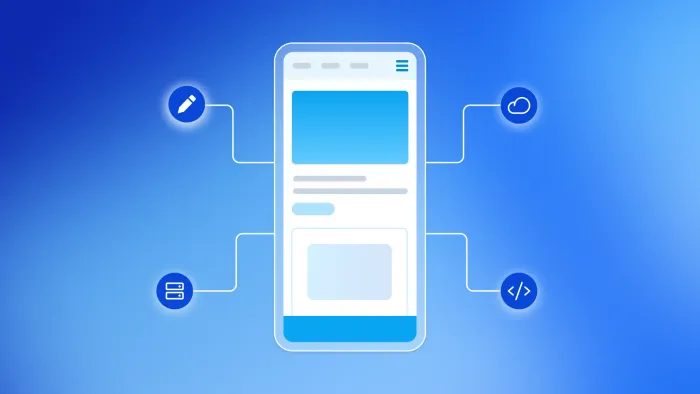
Server-side frameworks support logical operations, data handling, and third-party integrations. Selecting robust frameworks ensures consistent execution across various use cases. Express.js, Laravel, Spring Boot, Django, and FastAPI lead backend development through modular structures and high performance.
Programming Languages for Backend Systems
Language selection depends on project scale, developer familiarity, and ecosystem maturity. JavaScript, Python, PHP, and Java remain top backend languages due to strong libraries, community support, and versatile runtime environments.
Database Technologies for Mobile Apps
Choosing the correct database defines data handling efficiency. Relational systems like MySQL and PostgreSQL organize structured data with complex relationships. NoSQL systems like MongoDB and Firebase provide flexibility for unstructured or rapidly scaling data models.
Database Considerations:
- Query complexity
- Storage capacity requirements
- Scalability under user growth
- Security and redundancy systems
Security and Performance Best Practices
Security Measures
Data safety must anchor every app’s architecture. Employ end-to-end encryption across communication channels. Implement multi-factor authentication for stronger identity verification. Frequent audits and patching reduce breach risks and maintain compliance with modern data standards.
Performance Optimization Techniques
Optimization begins with efficient coding and intelligent caching. Use asynchronous data loading and lazy loading methods for reduced startup delay. Compress files and assets to enhance responsiveness while minimizing bandwidth usage.
Optimization Checklist:
- Minified scripts and assets
- Database query optimization
- Efficient API management
- Regular performance benchmarking
Continuous Monitoring and Testing
Ongoing testing prevents regression and performance degradation. Utilize automated pipelines for build testing and deployment. Real-time monitoring tools help track load time, crashes, and API response delays to maintain smooth operation.
Strategic Factors in Choosing a Mobile App Tech Stack
Developer Expertise Alignment
Teams perform efficiently when using familiar tools. Aligning project scope with developer expertise minimizes training time and prevents implementation errors. Selecting languages with strong ecosystem support ensures smoother development.
Project Complexity and Maintenance Outlook
Complex projects require modular architectures and long-term scalability planning. Frameworks offering clear documentation simplify updates and integration of new features over time. Maintenance efficiency directly influences lifecycle cost.
Decision Factors:
- Framework maturity
- Available technical resources
- Integration support
- Community and vendor updates
Future-Proofing and Integration Capability
Adopt stacks supporting modern updates and backward compatibility. Frameworks that enable seamless integration with analytics, AI, and third-party APIs enhance flexibility. Scalable architecture ensures adaptability during evolving technological trends.
Emerging Trends in Mobile App Tech Stacks
Low-Code and No-Code Integration
Low-code platforms empower teams to build applications rapidly without deep coding dependency. They integrate easily with backend APIs while providing visual interfaces for feature customization.
Cloud-Native Architecture
Cloud-native environments improve scalability and reliability. Using microservices and container-based deployments allows flexible resource management and reduced downtime.
Artificial Intelligence and Machine Learning Support
Modern stacks often include AI modules enabling predictive analytics, personalized experiences, and real-time recommendations. Integrating machine learning frameworks within mobile systems elevates engagement and retention rates.
Trend Highlights:
- Automated workflows
- Cloud-driven scalability
- AI-powered personalization
- Modular deployment strategies
Conclusion
A robust mobile app tech stack determines scalability, stability, and long-term success. Each element—frontend, backend, and database—contributes uniquely to performance and security. Selecting balanced frameworks and languages ensures adaptability and speed under growth conditions. Continuous evaluation, secure practices, and optimized architectures create efficient, reliable mobile applications aligned with evolving business objectives.
