

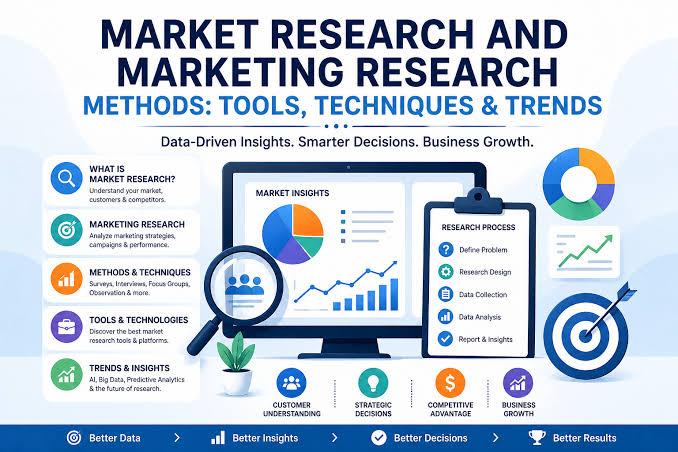
Understanding customers is essential for businesses that want to develop relevant products, communicate effectively, and compete in changing markets. Yet gathering useful market information can be challenging. Organizations must identify the right participants, design appropriate surveys, manage data collection, and interpret the results before they can make confident decisions.
A research marketplace helps connect research teams with survey respondents through a coordinated sample-sourcing environment. By bringing audience access and research management together, a marketplace can help businesses collect information from people whose experiences and preferences relate to their research questions.
PureSpectrum, through purespectrum.com, provides research technology intended to support audience access, survey management, and data quality. Businesses exploring these solutions should understand how marketplace-based research works and how it can contribute to better decisions.
The Connection Between Businesses and Consumers
Businesses need direct insight into the people who purchase, use, or consider their products. Internal sales records may reveal what customers buy, but they do not always explain why people make particular choices.
A company might discover that customers frequently abandon an online purchase without understanding the reasons. Another business may see strong product sales but lack information about which features influence customer preference.
Consumer research helps fill these gaps. Surveys can measure preferences across a defined audience, while interviews can explore motivations and experiences in greater depth.
A marketplace supports this process by helping researchers find participants who meet specified criteria. The resulting information can help organizations understand demand, improve customer experiences, and evaluate potential business opportunities.
How the Research Marketplace Model Works
The research marketplace model connects organizations that need survey responses with sources of participants who may be eligible for particular studies.
Researchers begin by defining their target audience and establishing the number of responses required. They may set quotas based on geography, demographics, purchasing behavior, or professional characteristics.
The research team then configures the survey, determines eligibility requirements, and launches data collection. Depending on the platform, participants may be sourced from multiple providers, and project progress can be monitored through a centralized interface.
Once responses have been collected, researchers review the data, apply quality controls, analyze the findings, and prepare reports.
The marketplace itself does not automatically turn responses into useful business knowledge. Survey design, sampling decisions, data validation, and interpretation remain important responsibilities throughout the process.
Why Access to the Right Participants Matters
Research participants should reflect the audience relevant to the business question. A company investigating customer satisfaction needs people who have actually used its products, while a business studying general brand awareness may need both customers and noncustomers.
Targeting helps researchers avoid collecting responses from people whose experiences are unrelated to the subject.
For specialized research, eligibility may involve professional roles, industry experience, purchasing authority, or particular product usage. International studies may require respondents from several countries or regions.
Researchers should ensure that eligibility requirements are realistic and that the sample supports the intended analysis. Extremely narrow targeting may make recruitment more difficult, while broad targeting may introduce irrelevant responses.
A marketplace can make audience sourcing more flexible, but businesses must still evaluate sample quality and representativeness before drawing conclusions.
Discovering Customer Needs and Preferences
Customer preferences influence product features, service expectations, price sensitivity, and brand selection. Research can reveal which of these factors matter most to a target audience.
For example, a technology company may assume customers prefer a product with numerous advanced features. Research might reveal that customers place greater value on simplicity and dependable support.
A retailer may discover that consumers are interested in sustainable products but need clearer information about pricing and product durability before purchasing.
These findings can inform product design, communication, and customer service. However, researchers should distinguish between isolated opinions and patterns supported by sufficient evidence.
Businesses can strengthen their understanding by combining survey results with interviews, customer support records, and actual purchasing behavior.
Supporting Competitive Analysis
Businesses need to understand not only their customers but also the alternatives customers consider.
Competitive research can examine awareness, perceived quality, pricing expectations, product benefits, and brand preference. It can help identify why a competitor attracts attention or where consumers believe existing products fall short.
For example, research may show that customers consider several brands equally reliable but prefer one because it offers a simpler purchasing experience. Another study might reveal that a smaller business has an opportunity to differentiate itself through better support.
These findings can help organizations identify practical ways to improve their position. The objective is not necessarily to imitate competitors, but to understand the factors that influence customer choices.
Research comparisons should use relevant competitors and appropriate audience definitions. Otherwise, businesses risk drawing conclusions from comparisons that do not reflect their actual market.
Connecting Insights With Product Development
Market insights can influence product development at multiple stages.
Before a product is launched, researchers can test concepts, explore potential demand, and compare alternative descriptions. During development, feedback can help identify usability issues and prioritize features. After launch, research can measure satisfaction and discover areas for improvement.
This process can help companies reduce uncertainty before committing substantial resources.
However, customer interest does not guarantee commercial success. Product costs, distribution, technical feasibility, competition, and purchasing behavior also influence results.
Businesses should use research as one part of a wider decision-making framework. The strongest product decisions combine consumer evidence with financial and operational analysis.
Improving Research Operations
Managing survey projects can require considerable coordination. Teams may need to communicate with multiple suppliers, monitor incoming responses, adjust quotas, and resolve fieldwork problems.
A marketplace platform can simplify parts of this process by providing a centralized view of project settings and delivery. Some systems support live monitoring, supplier management, and adjustments to quotas while data collection is underway.
PureSpectrum’s marketplace is designed to support sample sourcing and research workflows across multiple markets. Businesses considering purespectrum.com should review its current functionality and determine whether it fits their operational requirements.
Efficiency should not be measured only by how quickly a survey is launched. The quality of the responses, suitability of the audience, and usefulness of the findings are equally important.
Maintaining Trust in Research Findings
Research findings influence decisions, so organizations need confidence that the information is reliable.
Quality procedures may include eligibility screening, duplicate detection, response-pattern analysis, and checks for incomplete or inconsistent answers. Researchers should also monitor sample composition and examine whether the collected responses reflect the intended audience.
Privacy and transparency are essential. Participants should receive appropriate information about the study, and organizations should handle personal information responsibly.
Businesses should also document limitations. Online surveys can provide valuable insights, but the results may not represent every member of a population, particularly when the sampling approach is not probability-based.
Clear reporting helps stakeholders understand both what the research shows and what remains uncertain.
From Market Insights to Business Growth
Research findings can support growth when they lead to practical improvements.
A company may discover an underserved audience, identify a confusing product feature, or learn that its marketing message does not communicate the intended benefit. Each finding can guide a targeted response.
Organizations should prioritize actions according to their potential value, cost, and feasibility. They should also define how success will be evaluated.
Follow-up research can help determine whether a product improvement changed customer perception or whether a revised campaign improved awareness.
This creates a continuous learning process in which businesses gather evidence, implement changes, and evaluate the outcomes.
Conclusion
A Research marketplace connects businesses with potential survey participants and helps organize the collection of information needed to understand customers and markets. Its greatest value comes from enabling relevant research that answers clear business questions.
By combining suitable audience targeting, reliable survey design, appropriate quality controls, and thoughtful analysis, businesses can uncover useful insights about customer needs, product opportunities, and competitive conditions.
Organizations exploring research technology can review purespectrum.com and its marketplace capabilities to assess whether they fit their requirements. Ultimately, market insights become valuable when businesses translate reliable evidence into better products, stronger customer experiences, and more informed strategic decisions.
