

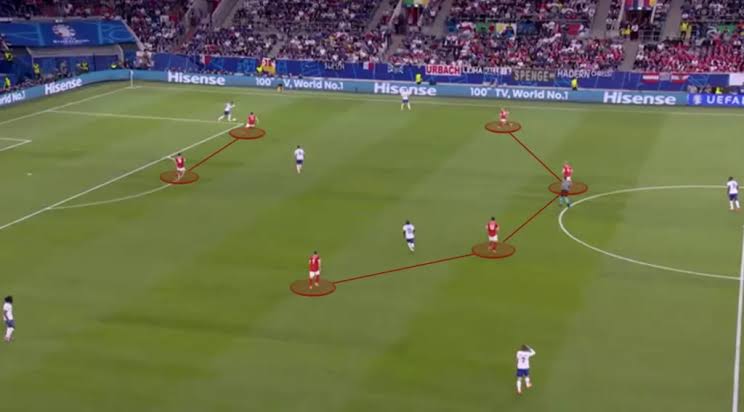
Modern football analytics frequently treats defensive organization and offensive productivity as separate disciplines, yet tactical history shows they are completely dependent on one another. The 2013/2014 English Premier League season served as a major turning point for this tactical evolution, marked by the arrival of highly aggressive, front-footed pressing systems. Rather than defending deep to restrict space, pioneering managers instructed their squads to win possession as close to the opposition box as possible. This structural adjustment completely transformed standard match dynamics, creating a fast-paced environment that directly resulted in high-scoring games and offered significant advantages for data-driven totals forecasting.
Why High-Pressing Systems Naturally Trigger High-Scoring Matches
The foundational objective of an advanced high-pressing system is to compress the pitch and force the opposing backline into immediate, low-margin distribution decisions. When an attacking side successfully triggers a turnover within the defensive third of their opponent, the distance required to transition into a goal-scoring opportunity is drastically minimized. This mechanical setup eliminates the need for prolonged build-up play, allowing rapid forwards to attack disorganized defensive shapes before the opposition can establish a compact low block.
Crucially, this style of play carries an inherent tactical trade-off that guarantees multi-goal environments. Operating with an aggressive forward press requires a team to deploy a highly exposed, high defensive line near the halfway mark to maintain structural compactness. When a technically proficient opponent successfully bypasses the initial pressing wave, they instantly gain massive, undefended territory to counter-attack against isolated central defenders. This dual reality ensures that high-pressing matches are rarely low-scoring, one-sided affairs; instead, they consistently produce volatile, two-way offensive outputs.
The Tactical Execution of Liverpool and Southampton’s Forward Systems
During this specific competitive cycle, Liverpool under Brendan Rodgers and Southampton under Mauricio Pochettino perfectly demonstrated how aggressive, front-footed defending could destabilize the entire league. While Manchester City captured the title through elite squad depth and individual brilliance, Liverpool and Southampton achieved over-performance by leveraging highly structured, collective squeezing mechanisms that completely disrupted the passing rhythms of traditional possession sides.
Comparing High-Intensity Choke Points and Spatial Closures
Southampton targeted highly organized positional recovery, systematically funneling opposition distribution into narrow central trap zones where defensive midfielders could execute physical tackles. Liverpool, conversely, utilized a chaotic, high-velocity counter-press designed to immediately release Luis Suárez and Daniel Sturridge the exact second possession was overturned. This variance in pressing style changed how opponents collapsed under stress, though both methods achieved the identical result of inflating the total number of transitions inside the final third.
Mapping the Mechanical Stages of a High-Press Goal Transition
To accurately identify which matches are most likely to exceed standard scoring thresholds, analysts must understand the precise sequence of events that turns a defensive movement into a quick goal. A high-press system relies on systemic triggers rather than individual efforts. The structured procedural layout below breaks down the exact steps that occur when an aggressive pressing unit forces a high-value turnover.
1.Establish the Pressing Trigger:First 5 seconds of opponent possession.
The defensive forwards close down the opposing fullbacks the moment a backwards or lateral pass is executed, cutting off easy horizontal passing lanes.
2.Compress the Central Space:Midfield squeezing.
The midfield line advances rapidly to lock onto the opponent’s central outlets, forcing the ball-carrier to make a hurried, blind vertical pass under intense physical duress.
3.Execute the Interception:Turnover phase.
A defensive midfielder or inverted winger cuts the passing lane, securing the ball within 30 yards of the opponent’s goal line while the opposition is still expanding for build-up.
4.Launch the Immediate Vertical Attack:The transition window.
The ball is played forward instantly into the penalty area, capitalizing on the opponent’s split-center backs who are caught entirely out of defensive position.
This structural sequence highlights why aggressive pressing teams are so valuable for total goals forecasting. The entire system is engineered to bypass slow build-up phases and generate high-velocity attacking situations within seconds of winning the ball. Analysts evaluating live match frames should not merely look at simple shots-on-target metrics; instead, they must track the precise geometric location of turnovers to gauge whether a high-press is successfully breaking the opponent’s defensive structure.
Statistical Comparison of Pressing Efficiency Against Over Spreads
Evaluating the full-season metrics from the 2013/2014 campaign reveals a striking correlation between high-intensity pressing teams and an elevated percentage of matches landing comfortably over the standard 2.5 and 3.5 goal thresholds. Because the public market often underprices the defensive vulnerabilities associated with a high line, these teams consistently generated massive value for totals specialists. The following data table illustrates the definitive scoring trends produced by the league’s most aggressive pressing units.
| Team Profile (2013/14 Campaign) | PPDA (Passes Allowed Per Defensive Action) | Average Total Match Goals (Combined) | Matches Exceeding Over 2.5 Goals | Matches Exceeding Over 3.5 Goals |
| Southampton | 8.1 (High Intensity) | 2.63 | 52.6% | 31.6% |
| Liverpool | 9.4 (High Intensity) | 3.97 | 78.9% | 55.3% |
| Swansea City | 12.1 (Moderate Intensity) | 2.74 | 55.3% | 28.9% |
| West Ham United | 14.8 (Low Intensity) | 2.39 | 42.1% | 18.4% |
The empirical data highlights a clear relationship: teams with a low PPDA metric—which signifies a highly aggressive press that allows very few opposition passes before making a defensive intervention—consistently see higher combined goal volumes. Liverpool’s historic campaign stands out as an extreme example, where their relentless press coupled with a highly exposed defensive line led to nearly 80% of their fixtures hitting the Over 2.5 market. For analytical modeling, pairing a low-PPDA pressing side against a lower-table team that struggles with passing accuracy under pressure represents one of the highest-probability setups for targeting total goals markets.
When Low-Block Retaliation Neutralizes the Advanced Forward Press
The primary failure case for a high-pressing model occurs when an opposition manager completely refuses to participate in short, deep build-up play. In the 2013/2014 season, conservative long-ball teams like Sam Allardyce’s West Ham United frequently neutralized aggressive pressing units by instructing their goalkeepers and central defenders to bypass the midfield entirely via direct, aerial distribution to a physical target man.
When a team bypasses the pressing lines through direct long-ball football, the high press is denied the opportunity to generate high-value turnovers in the final third. Instead, the game breaks down into a series of aerial duels and second-ball scrambles in the middle third of the pitch. This tactical adjustment dramatically slows down the tempo of the game and reduces transition velocity, causing a sharp drop in expected goals (xG) that can completely derail pre-match expectations for a high-scoring blowout.
Maximizing Value and Market Line Entry on Advanced Betting Interfaces
Capitalizing on these highly predictable high-press goal trends requires an optimization of entry timing across digital wagering ecosystems. When a team like Pochettino’s Southampton confronted a top-four opponent away from home, the pre-match goal lines were routinely set lower due to traditional, conservative assumptions regarding away-team behavior.
Observation of these shifting market trends indicates that modelers who track real-time PPDA and pressing structures can secure excellent value by tracking odds through a modern sports betting service. Utilizing the dynamic, live odds compilation interfaces backed by สมัคร ufa168 allows analysts to take advantage of favorable pricing adjustments the exact moment in-play data confirms that an underdog’s high press is successfully generating turnovers against a favorite’s struggling backline, turning advanced tactical tracking into highly precise market positions.
Differentiating Human Tactical Systems from Algorithmic Chance Models
Developing a sustainable forecasting framework for high-pressing football metrics requires recognizing the massive operational divide separating human athletic performance from purely digital chance environments. A football match involves fluid variables like individual stamina, real-time tactical adjustments, and changing weather conditions, meaning the effectiveness of a high press can degrade significantly over ninety minutes.
This human-driven volatility shares no common ground with the static, unyielding mathematical landscapes found across a digital casino online website where outcomes are determined exclusively by hard-coded, isolated software loops. While virtual tables rely on fixed probabilities that remain entirely immune to fatigue or emotional pressure, sports analytics require a flexible model capable of reading physical exertion and managerial decision-making, showing why mastering high-press analysis remains a highly sophisticated intellectual pursuit.
Summary
The 2013/2014 Premier League season provided clear evidence that aggressive high-pressing systems are a primary driver of high-scoring match volatility. Teams like Liverpool and Southampton demonstrated that forcing turnovers deep in the opposition third creates a high volume of rapid transition goals while simultaneously leaving their own defensive lines highly exposed to quick counter-attacks. By tracking pressing intensity through specialized metrics like PPDA and understanding how specific opponents react to intense physical pressure, analysts can insulate their models from generic data and accurately identify the precise matchups primed to smash total goals markets.
