

The American higher education landscape has reached a pivotal “hyper-personalization” phase. In 2026, the “one-size-fits-all” approach to academic writing is no longer just outdated—it is ineffective. According to recent 2025-2026 EdTech reports, students using personalized learning technologies show an average improvement of 8-11% in learning outcomes compared to traditional methods.
Modern platforms have moved beyond simple grammar checks. They now function as sophisticated ecosystems that understand a student’s unique voice, academic level, and specific disciplinary constraints. By leveraging data-based individualization (DBI), these platforms provide a scaffolded experience where the student remains the primary author while the technology acts as a strategic “argumentative sparring partner.”
The Shift to AI-Human Collaborative Ecosystems
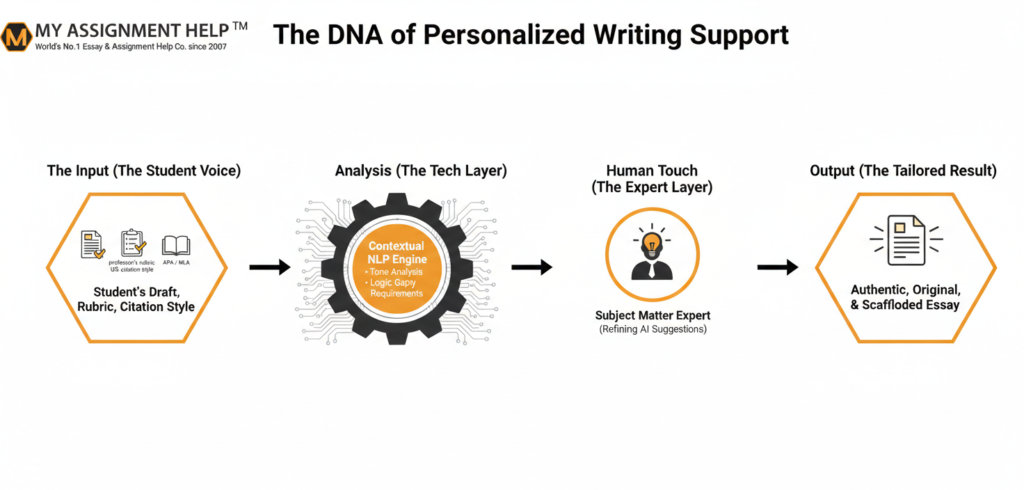
One of the most significant developments in the US this year is the consolidation of digital tools. Instead of juggling ten different apps, students are gravitating toward unified platforms that offer holistic support. These platforms use Natural Language Processing (NLP) to analyze the student’s drafting patterns and provide feedback that is formative rather than merely corrective.
For instance, when a student is struggling to articulate a complex thesis in a sociology paper, modern essay help services do not just provide a template; they analyze the student’s existing research and suggest structural improvements that align with their specific rhetorical goals. This ensures that the final output maintains the student’s unique authorial voice while adhering to rigorous academic standards. Furthermore, these platforms often integrate helpful resources, such as teaching students how to open their papers with impact by following current essay hook examples, which helps build foundational skills for the long term.
4 Ways Platforms are Personalizing the Writing Journey
1. Data-Based Individualization (DBI)
As highlighted in research from the Iowa Reading Research Center, DBI involves regular data collection to monitor student progress and adjust instruction. In 2026, writing platforms use “Sentiment AI” to gauge a student’s confidence and frustration levels during the writing process, adjusting the complexity of suggestions accordingly.
2. Disciplinary Tone Adaptation
Writing a lab report for a Bio-Medical Science course requires a vastly different tone than a reflective essay for a Philosophy seminar. Modern platforms now feature “Field-Specific Terminology Checking,” ensuring that the vocabulary and sentence structures used are appropriate for the specific US academic department the student belongs to.
3. Ethical AI Sparring
Rather than replacing the writer, tools are used for “targeted research” and “brainstorming.” A study in 2025 noted that when students use AI for formative feedback—like asking for five alternative openings—they produce clearer prose and stronger organization than those who use AI as a replacement for authorship.
4. Real-Time Engagement Analytics
New dashboards allow students to see their own growth. By tracking metrics like lexical diversity and cohesive overlap, students can see how their writing has evolved over a semester, turning the act of writing into a measurable skill-building journey.
The US Market: Why Personalization Matters Now
In 2026, US colleges are facing tighter budgets and a growing student mental health crisis. Data from Driving Toward a Degree 2025 shows that students define “holistic support” much more broadly than institutions do. They want to know that help is available 24/7, tailored to their schedule and specific struggles.
| Feature | Traditional Support | Modern Personalized Platform (2026) |
| Availability | Scheduled Office Hours | 24/7 On-Demand Access |
| Feedback Style | Summative (End of Grade) | Formative (During the Process) |
| Tech Integration | Disconnected Tools | Interoperable, Unified Ecosystem |
| Focus | Correcting Errors | Enhancing Logic & Argumentation |
Key Takeaways
- Personalization is the Standard: By 2026, tailored learning is an expectation, not a luxury.
- Human-AI Synergy: The most successful students use AI for structure and research while retaining final “cut authority” over their sentences.
- Integrity is Built-in: Modern platforms prioritize original thinking and provide built-in plagiarism checks to meet 2026’s strict academic policies.
- Skill-First Approach: The goal has shifted from “finishing the paper” to “becoming a better writer” through constant, data-driven feedback.
Frequently Asked Questions (FAQ)
Q: Does using a personalized writing platform count as plagiarism?
A: No, as long as the platform is used for support, feedback, and structural guidance. Modern platforms focus on enhancing the student’s own ideas and ensuring academic integrity through original content generation.
Q: How do these platforms protect student data privacy?
A: Leading US platforms in 2026 adhere to updated Title II regulations and COPPA rules, ensuring that student data is encrypted and not used for training external models without consent.
Q: Can these tools help with specific US citation styles like APA 7 or MLA 9?
A: Yes, they feature automated citation formatters that are updated in real-time as style guides evolve, ensuring 100% accuracy in referencing.
References:
- AIPRM. (2025). The Impact of AI-Powered Instruction on US Student Achievement: 2025 Report. 2. Every Learner Everywhere. (2026). Driving Toward a Degree 2025: Delivering Value and Ensuring Viability in Higher Ed.
- Frontiers in Education. (2025). The impact of generative AI on academic reading and writing: A synthesis of evidence (2023–2025).
- Iowa Reading Research Center. (2025). Data-Based Instruction Supports Early Writing Skills. University of Iowa.
- MDPI. (2025). Effects of AI-Assisted Feedback on Academic Writing in Higher Education Students. Education Sciences, 15(10).
- TCS Education. (2026). EdTech Trends in 2026: How Intelligence will Redefine Learning Systems.
- UNESCO. (2025). Guidelines for Generative AI in Higher Education and Research.
Author Bio
Dr. Sarah Mitchell is a Senior Content Strategist and Academic Consultant at MyAssignmentHelp. With over 12 years of experience in the US EdTech sector, Dr. Mitchell specializes in the intersection of Artificial Intelligence and pedagogical theory. She is a frequent contributor to journals on educational equity and has helped thousands of students navigate the complexities of modern academic writing through personalized support strategies.
