


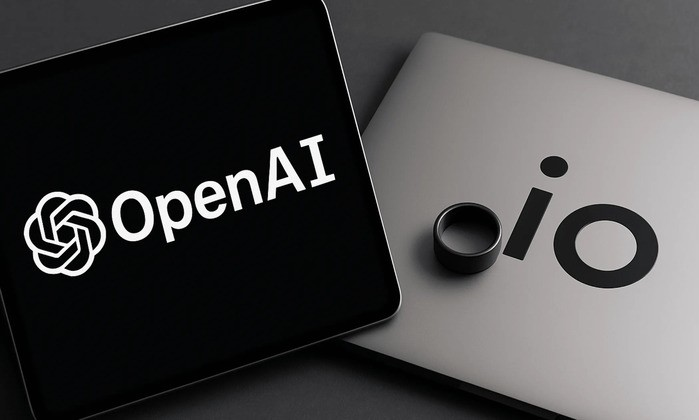
OpenAI continues expanding its influence across artificial intelligence and hardware integration. After acquiring the design firm io, founded by Sir Jony Ive, OpenAI’s ambitions have shifted toward creating a new generation of ChatGPT-powered devices. The collaboration signals the company’s intention to merge advanced AI with elegant, human-centric design principles.
Reports indicate that OpenAI is developing several hardware products designed to interact naturally with users through voice, gestures, and context awareness. These potential devices represent OpenAI’s entry into consumer technology and the next stage in its evolution beyond software models.
Industry insiders suggest OpenAI aims to establish a complete AI ecosystem, introducing products that merge conversational intelligence with everyday experiences. The effort resembles Apple’s early ecosystem strategy, where hardware, software, and design merge into seamless user experiences.
OpenAI’s Hardware Vision
Strategic Acquisition of io
OpenAI’s acquisition of io, the design company started by the visionary Jony Ive, reflects a deliberate move toward hardware excellence. Ive’s influence on Apple’s design legacy—ranging from the iMac to the iPhone—positions him as the ideal collaborator for an AI-driven design philosophy.
This partnership focuses on developing devices that seamlessly integrate ChatGPT’s conversational intelligence with intuitive hardware. By combining Ive’s design precision and OpenAI’s language capabilities, the collaboration sets the stage for next-generation AI products.
AI Hardware Lineup in Development
Multiple Devices Under Exploration
Reports indicate OpenAI is pursuing various hardware concepts instead of one flagship device. Discussions with supply chain partners reveal prototypes and product ideas under testing.
OpenAI reportedly plans devices such as a smart speaker without a screen, AI-powered glasses, digital voice recorders, and wearable communication pins. The release timeframe could fall between late 2026 and early 2027, aligning with current development cycles.
Potential Product Types
- Smart Speaker – Compact, voice-first interaction device optimized for conversational AI.
- Wearable Glasses – Real-time assistant for contextual visual understanding.
- Voice Recorder – Intelligent transcription and summarization for professionals.
- AI Pin – Portable, discrete device enabling continuous connection with ChatGPT.
These categories highlight OpenAI’s intent to diversify AI accessibility beyond screens and traditional input systems.
AI Beyond Screens
Moving from Display-Centric to Context-Centric
Industry speculation suggests OpenAI aims to remove traditional screen dependency, allowing users to interact through natural communication. A device functioning through voice, gesture, and environmental awareness supports more immersive engagement.
The idea mirrors the post-smartphone paradigm, where computing becomes ambient—existing everywhere yet visible nowhere. By shifting focus from visual display to environmental intelligence, OpenAI seeks to transform how users engage with AI in daily tasks.
Collaboration Roots and Early Experiments
Pre-Acquisition Development Phase
Before the acquisition announcement, OpenAI and io reportedly collaborated for several years on confidential prototypes. Their joint research explored headphones and camera-equipped devices that could interpret context, sound, and environment in real-time.
Such prototypes likely informed the design principles guiding OpenAI’s current direction—creating devices capable of understanding surroundings and responding adaptively. This experimentation phase established the foundation for a new category of AI-integrated hardware.
The Third Core Device Concept
Redefining Personal Technology
Insider reports describe OpenAI’s first product as a “third core device,” complementing laptops and smartphones. Unlike current gadgets, this device aims for continuous awareness without intrusiveness.
Placed on a desk or carried in a pocket, the product would capture environmental cues, process user context, and provide insights through natural communication. Such an approach positions the device as a bridge between personal assistant and daily companion.
Key Functional Objectives
- Ambient Awareness – Understanding surroundings through sensors and contextual data.
- Minimal Intrusion – Functioning without demanding visual attention.
- Seamless Communication – Conversing naturally through audio or gestures.
- Adaptive Intelligence – Evolving with individual habits and preferences.
This framework suggests OpenAI intends to deliver not just hardware but a new interaction paradigm powered by real-time language understanding.
Learning from Competitors’ Setbacks
Challenges of AI Hardware Launches
The AI hardware market has seen multiple ambitious launches yet limited long-term success. Products such as Humane’s AI Pin and Rabbit R1 attracted attention but struggled to maintain user engagement due to performance limitations and unclear use cases.
In contrast, Plaud Note, a transcription-focused device, achieved commercial traction through simplicity and reliability. This outcome underscores the importance of practical functionality over novelty. OpenAI’s experience with ChatGPT may allow it to strike a stronger balance between capability and user need.
Design Philosophy Inspired by Apple’s Legacy
Merging Elegance with Intelligence
Jony Ive’s reputation for minimalist, user-focused design aligns naturally with OpenAI’s mission to humanize technology. The collaboration could yield devices blending aesthetic refinement with functional AI depth.
Ive’s design principles—simplicity, material honesty, and user empathy—could guide how OpenAI translates conversational intelligence into tangible interaction. Each device may embody understated sophistication while remaining deeply capable.
Possible Design Hallmarks
- Unibody construction emphasizing durability
- Distraction-free interaction surfaces
- Subtle AI indicators replacing visual clutter
- Intuitive tactile feedback integrating natural movement
This partnership could establish a new design standard where AI feels invisible yet omnipresent.
Market Implications and Strategic Positioning
Shaping the Future of AI Ecosystems
OpenAI’s entry into hardware suggests an ambition to control both the software intelligence and the physical interface. Owning both elements allows the company to optimize user experience and data interaction securely.
With ChatGPT already embedded in daily workflows, dedicated hardware would expand its reach, enabling always-available, voice-driven AI experiences across professional and personal environments. The strategic synergy between hardware and AI software could replicate Apple’s ecosystem dominance in a new domain.
Market Opportunities
- Growing demand for intelligent assistants
- Shift toward ambient computing
- Desire for privacy-respecting AI devices
- Expansion of AI in productivity and lifestyle sectors
By aligning design, AI capability, and usability, OpenAI positions itself to lead a transformative market wave.
Challenges Ahead
Balancing Innovation with Privacy and Trust
Despite potential, OpenAI faces complex challenges. Building devices with environmental awareness introduces privacy and data governance concerns. Ensuring transparent, ethical AI operation will be crucial for public trust.
Moreover, the transition from software provider to hardware manufacturer demands expertise in supply chain logistics, manufacturing, and product lifecycle management—domains requiring precise coordination and capital investment.
Still, the company’s partnership with established suppliers and recruitment of hardware experts indicates readiness to navigate these challenges strategically.
OpenAI’s Long-Term Outlook
Toward an Integrated AI Lifestyle
OpenAI’s pursuit of ChatGPT-powered hardware marks a decisive step toward integrating artificial intelligence into daily existence. Each planned product seems designed to extend human capability, simplify communication, and eliminate digital friction.
If executed successfully, OpenAI’s devices could transform AI from a software utility into a ubiquitous lifestyle interface. This integration could usher in an era where conversational intelligence underpins every interaction—professional, creative, or personal.
FAQs
What is OpenAI developing with Jony Ive’s company io?
OpenAI is creating ChatGPT-powered devices combining intelligent interaction with refined industrial design, targeting intuitive hardware experiences.
When will OpenAI’s AI hardware launch?
Projected timelines suggest initial product release around late 2026 or early 2027, following active development and supplier coordination.
What kinds of devices are being considered?
Concepts include smart speakers, wearable glasses, AI pins, and advanced voice recorders centered on contextual intelligence.
How do these devices differ from existing AI gadgets?
Unlike standard smart devices, OpenAI’s designs emphasize ambient awareness, natural conversation, and minimal visual distraction.
Why is Jony Ive’s involvement significant?
His design philosophy ensures OpenAI’s hardware reflects simplicity, elegance, and user empathy, enhancing the human-AI relationship.
Conclusion
OpenAI’s foray into AI-powered devices signals a pivotal evolution in consumer technology. The collaboration with Jony Ive combines artistic design mastery and advanced intelligence, setting the stage for a reimagined interaction era. By merging awareness, functionality, and minimalism, OpenAI positions itself to define the standard for next-generation AI hardware and reshape digital engagement across all environments.
